
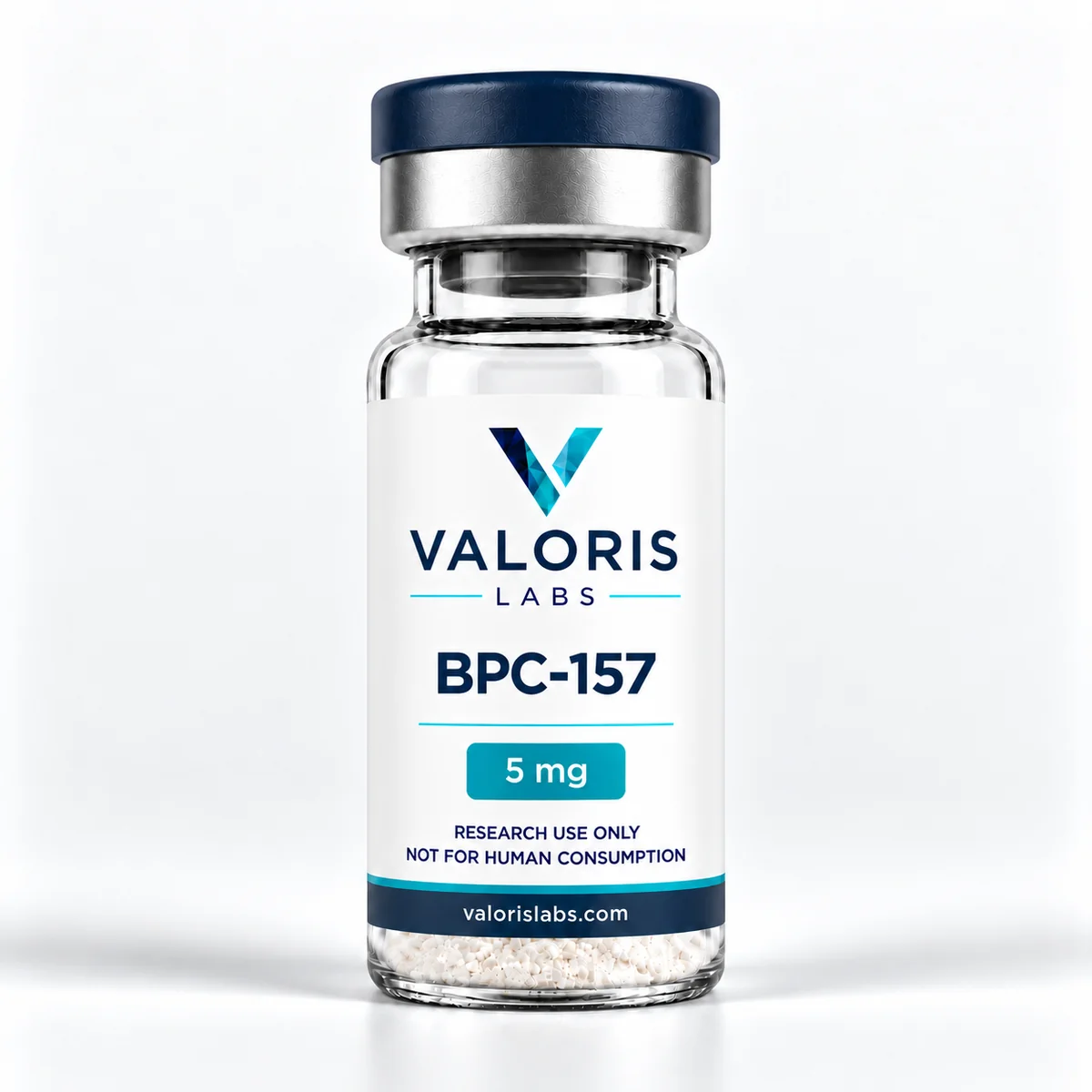
Research profile
Tendon biology and repair signalling
Preclinical evidence
What it is and why it is studied
BPC-157 is a 15-amino-acid peptide investigated in tissue-repair models. How do tendons respond to injury, and which signals influence their repair? BPC-157 attracts research interest because experiments connect it with tendon-cell activity, collagen organisation and the mechanical properties of healing tissue.
What studies have found
In a rat Achilles-tendon injury study, researchers reported improved tendon strength, functional recovery and collagen formation. A separate study in rat tendon fibroblasts found increased growth-hormone receptor expression and a stronger cell-proliferation response to growth hormone.
These findings make tissue-repair signalling the focus of this profile. They come from animal and isolated-cell experiments, rather than trials establishing injury recovery or safety in people.
Read the research
Chemical reference
| Reference sequence | H-Gly-Glu-Pro-Pro-Pro-Gly-Lys-Pro-Ala-Asp-Asp-Ala-Gly-Leu-Val-OH |
|---|---|
| Molecular formula | C62H98N16O22 |
| Molar mass | Approximately 1419.5 g/mol |
| Reference CAS | 137525-51-0 |
| PubChem CID | 9941957 |
Chemical information describes the named reference structure, not a batch analysis or confirmation of the material supplied. Counterions, water and excipients are excluded unless stated.
Understanding these details
A sequence describes the order of residues in a peptide. A molecular formula describes the atoms in the reference structure. Molar mass is expressed in grams per mole; it is not the amount in a vial. CAS numbers and PubChem identifiers help you find the corresponding chemical records.
Selected literature and reference information checked 11 September 2026. Study findings concern the preparations and models described; they do not certify this product. For laboratory research only.
Reviews
There are no reviews yet.