
Research profile
Copper-binding peptides and extracellular matrix biology
Cell-based evidence
What it is and why it is studied
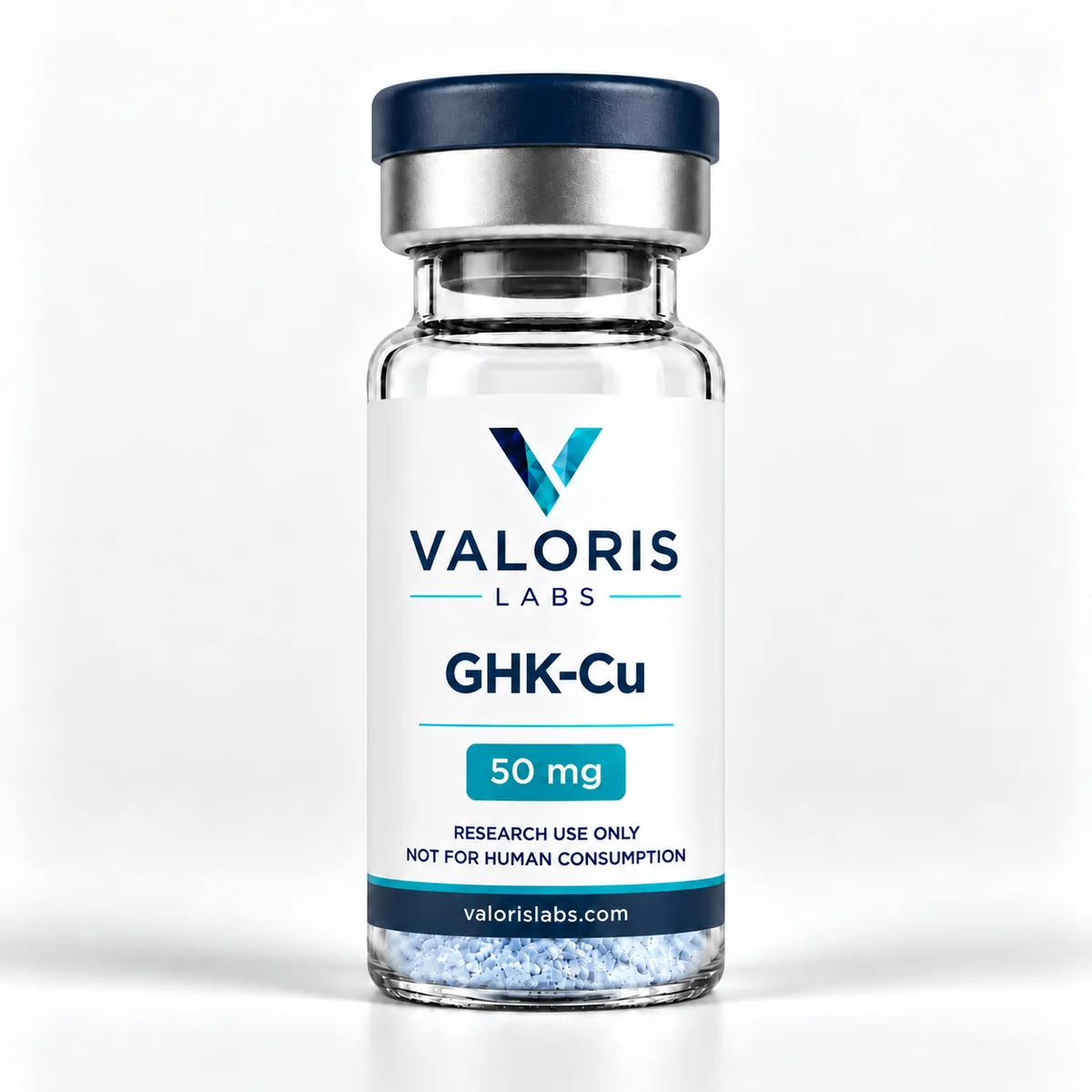
GHK-Cu is a copper(II) complex of the tripeptide Gly-His-Lys. Collagen gives connective tissue its structure. GHK-Cu brings together a copper-binding tripeptide and a research question: how can peptide signals influence the cells that produce that structure?
What studies have found
A fibroblast-culture study found that GHK-Cu stimulated collagen synthesis without an accompanying increase in cell numbers. This is a starting point for exploring collagen production and the biology associated with tissue repair.
The cited evidence measures a laboratory cell response; it does not establish skin rejuvenation or the effects of administering a vial to people.
Read the research
Chemical reference
| Reference identity | Copper(II) complex of the tripeptide GHK |
|---|---|
| Peptide component | Gly-His-Lys |
GHK alone and GHK complexed with copper are different chemical references. A formula, molar mass or CAS for the supplied complex is not assigned here because its chemical form has not been confirmed.
Chemical information describes the named reference structure, not a batch analysis or confirmation of the material supplied. Counterions, water and excipients are excluded unless stated.
Understanding these details
A sequence describes the order of residues in a peptide. A molecular formula describes the atoms in the reference structure. Molar mass is expressed in grams per mole; it is not the amount in a vial. CAS numbers and PubChem identifiers help you find the corresponding chemical records.
Selected literature and reference information checked 11 September 2026. Study findings concern the preparations and models described; they do not certify this product. For laboratory research only.
Reviews
There are no reviews yet.