
Research profile
Neurotrophic signalling and experimental brain injury
Animal and gene-expression studies
What it is and why it is studied
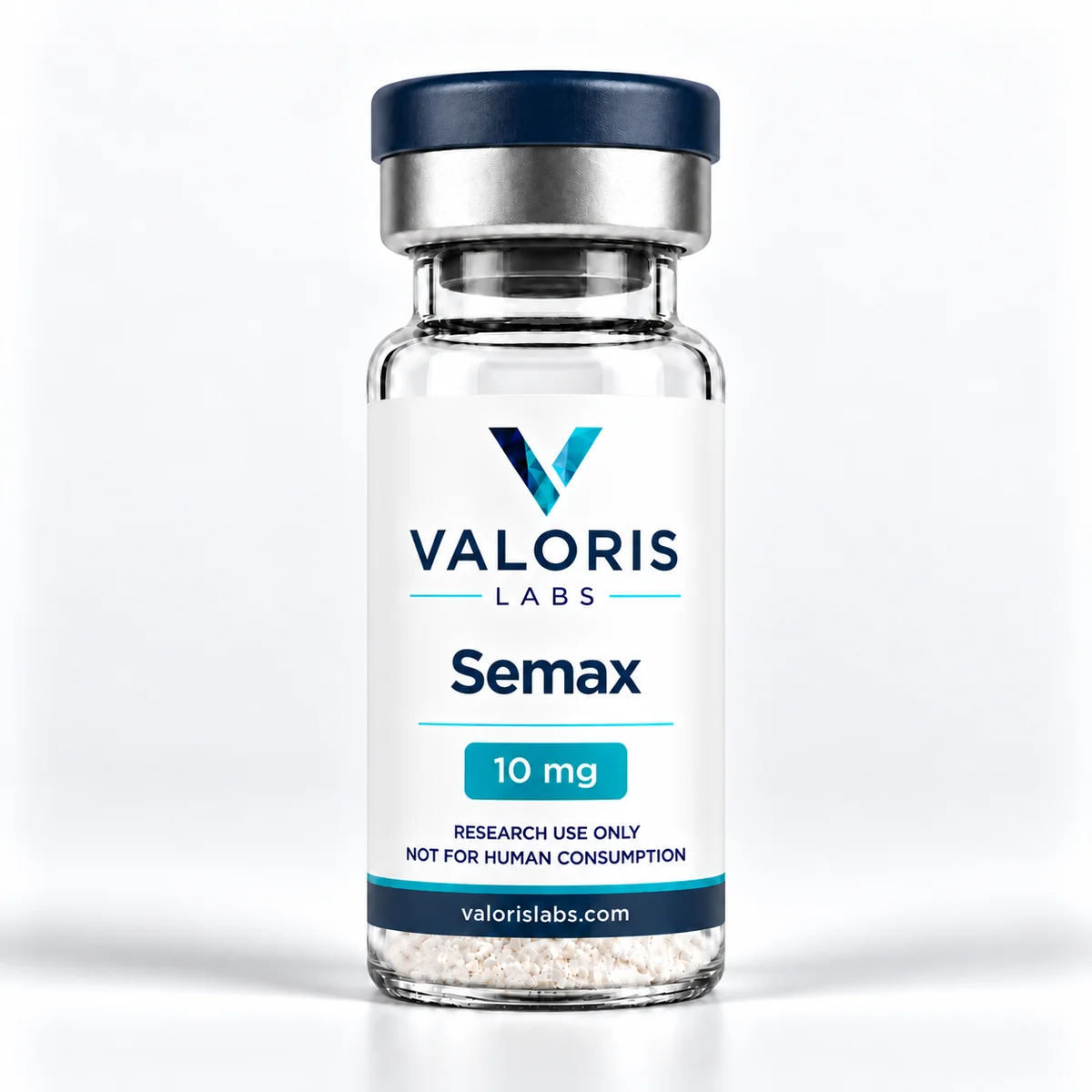
Semax is a seven-amino-acid peptide. Researchers investigate its effects on neurotrophic signalling and the cellular responses to experimental brain injury.
What studies have found
A rat study reported increased BDNF levels and TrkB signalling in the hippocampus. Separate rat studies examined changes in immune, vascular and neural gene-expression pathways after experimental cerebral ischaemia.
These findings describe animal experiments. They do not establish improved cognition in healthy people or verify the effects of this research vial.
Read the research
- Rat hippocampal BDNF / TrkB study · 2006
- Rat ischaemia study · 2014
- Rat gene-expression study · 2024
Chemical reference
| Reference sequence | H-Met-Glu-His-Phe-Pro-Gly-Pro-OH |
|---|---|
| Molecular formula | C37H51N9O10S |
| Molar mass | Approximately 813.9 g/mol |
| Reference CAS | 80714-61-0 |
| PubChem CID | 9811102 |
Chemical information describes the named reference structure, not a batch analysis or confirmation of the material supplied. Counterions, water and excipients are excluded unless stated.
Understanding these details
A sequence describes the order of residues in a peptide. A molecular formula describes the atoms in the reference structure. Molar mass is expressed in grams per mole; it is not the amount in a vial. CAS numbers and PubChem identifiers help you find the corresponding chemical records.
Selected literature and reference information checked 11 September 2026. Study findings concern the preparations and models described; they do not certify this product. For laboratory research only.
Reviews
There are no reviews yet.