
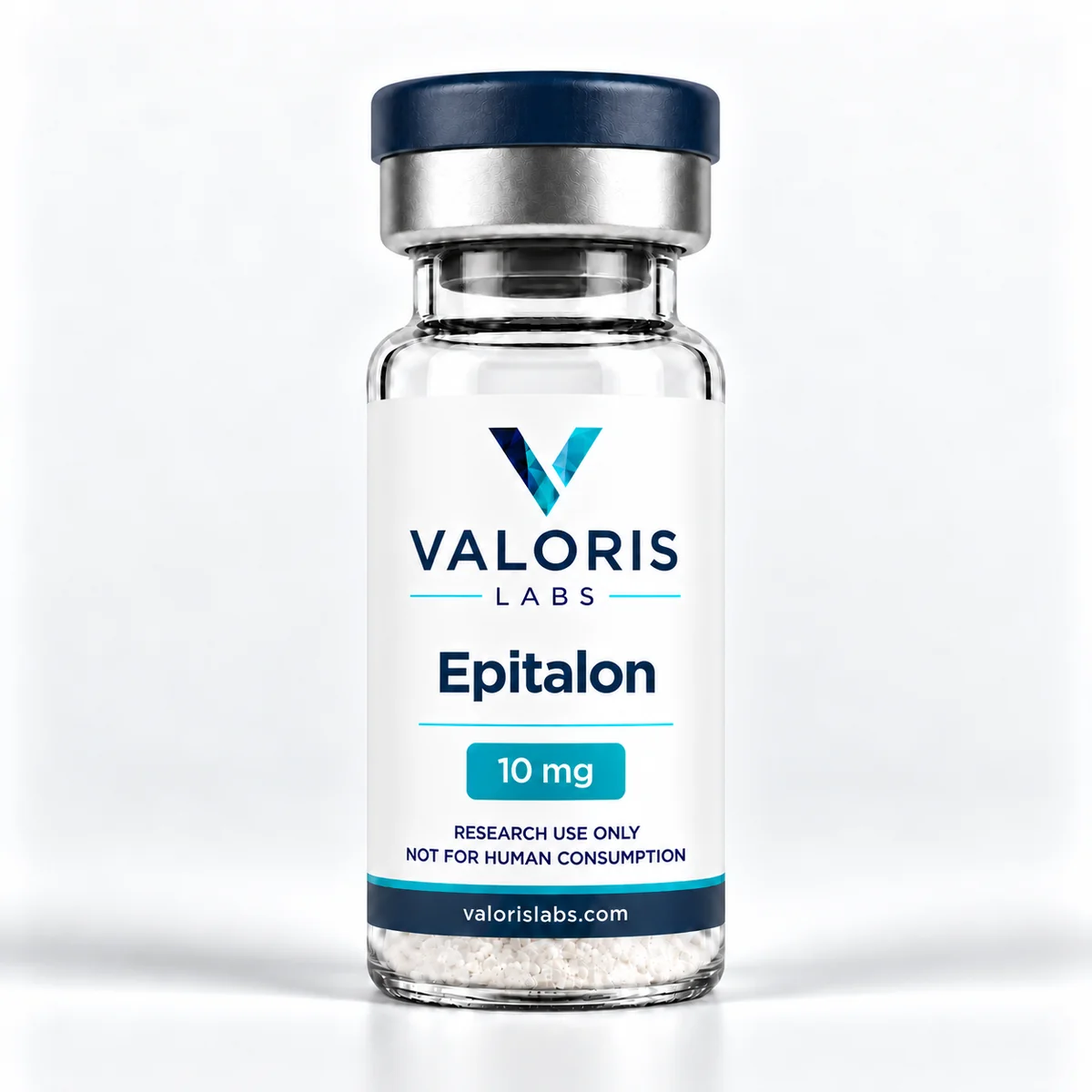
Research profile
Telomerase and telomere biology
Cell-based evidence
What it is and why it is studied
Epithalon, also written Epitalon, is a four-amino-acid peptide: Ala-Glu-Asp-Gly. Telomeres and telomerase are studied for their role in how cells divide and age. Epithalon's research profile centres on an early laboratory investigation of these processes in cultured human cells.
What studies have found
A study in human fetal fibroblast cultures reported telomerase activation and telomere elongation after Epithalon exposure. It offers a cellular starting point for investigating telomere maintenance.
Results in cultured cells do not establish longer human life, improved healthspan or the long-term safety of personal use.
Read the research
Chemical reference
| Reference sequence | H-Ala-Glu-Asp-Gly-OH |
|---|---|
| Molecular formula | C14H22N4O9 |
| Molar mass | Approximately 390.35 g/mol |
| Reference CAS | 307297-39-8 |
| PubChem CID | 219042 |
Chemical information describes the named reference structure, not a batch analysis or confirmation of the material supplied. Counterions, water and excipients are excluded unless stated.
Understanding these details
A sequence describes the order of residues in a peptide. A molecular formula describes the atoms in the reference structure. Molar mass is expressed in grams per mole; it is not the amount in a vial. CAS numbers and PubChem identifiers help you find the corresponding chemical records.
Selected literature and reference information checked 11 September 2026. Study findings concern the preparations and models described; they do not certify this product. For laboratory research only.



Reviews
There are no reviews yet.