
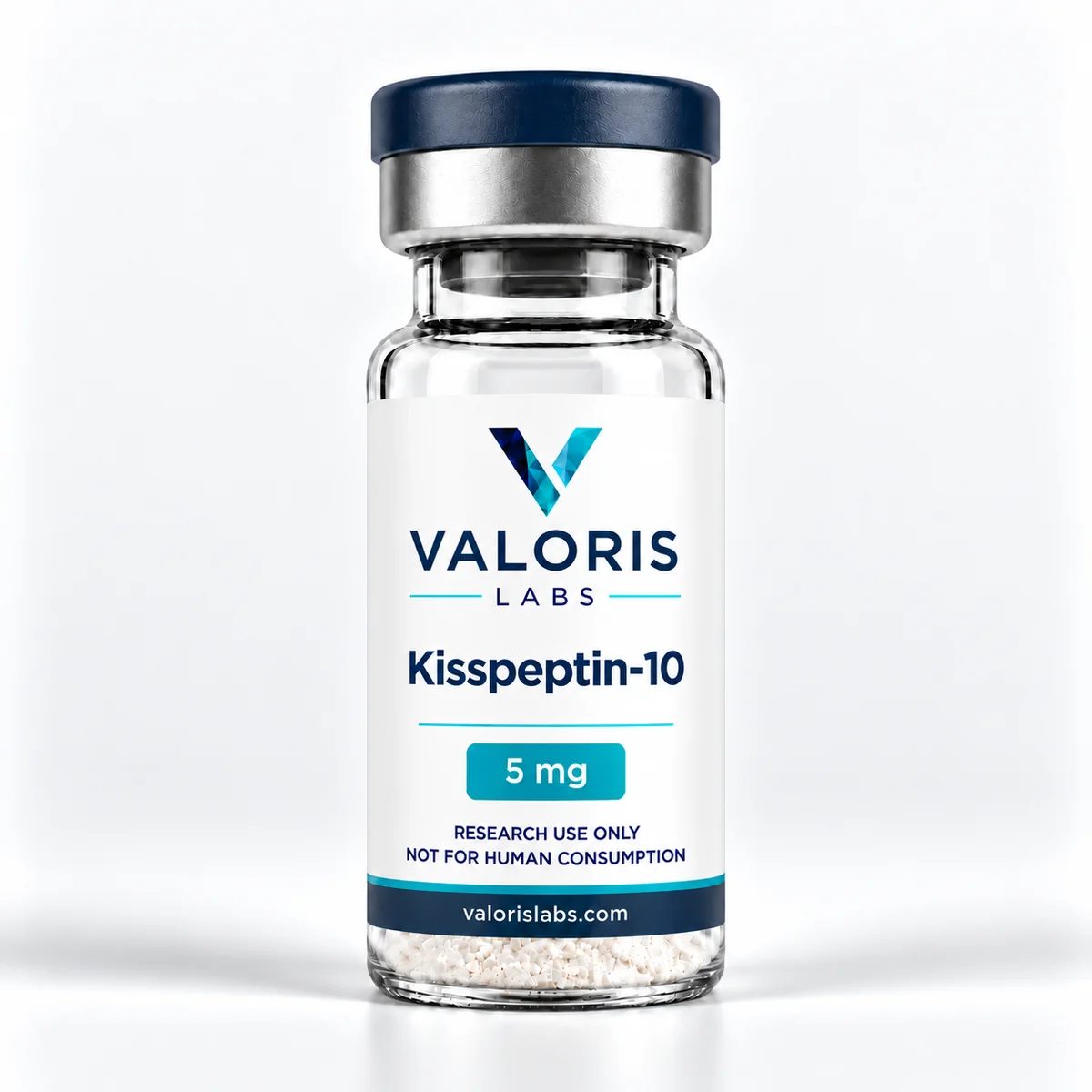
Research profile
Reproductive hormone signalling
Small human physiology studies
What it is and why it is studied
The human kisspeptin-10 reference is a ten-residue, C-terminally amidated peptide. Kisspeptin-10 is studied as an upstream signal in the system that regulates reproductive hormones. It offers a way to investigate how signalling changes translate into patterns of luteinising-hormone release.
What studies have found
A small study in healthy men reported increased luteinising-hormone secretion and changes in its pulse frequency and size. Researchers also measured testosterone responses during the physiology experiments.
These short studies characterise hormone signalling. They do not establish improved fertility or broad personal-use benefits, and long-term safety was not established.
Read the research
Chemical reference
| Reference sequence | H-Tyr-Asn-Trp-Asn-Ser-Phe-Gly-Leu-Arg-Phe-NH2 |
|---|---|
| Molecular formula | C63H83N17O14 |
| Molar mass | Approximately 1302.4 g/mol |
| Reference CAS | 374675-21-5 |
| PubChem CID | 25240297 |
Reference values describe human kisspeptin-10 with a C-terminal amide. Species and terminal modifications matter when comparing studies.
Chemical information describes the named reference structure, not a batch analysis or confirmation of the material supplied. Counterions, water and excipients are excluded unless stated.
Understanding these details
A sequence describes the order of residues in a peptide. A molecular formula describes the atoms in the reference structure. Molar mass is expressed in grams per mole; it is not the amount in a vial. CAS numbers and PubChem identifiers help you find the corresponding chemical records.
Selected literature and reference information checked 11 September 2026. Study findings concern the preparations and models described; they do not certify this product. For laboratory research only.




Reviews
There are no reviews yet.